
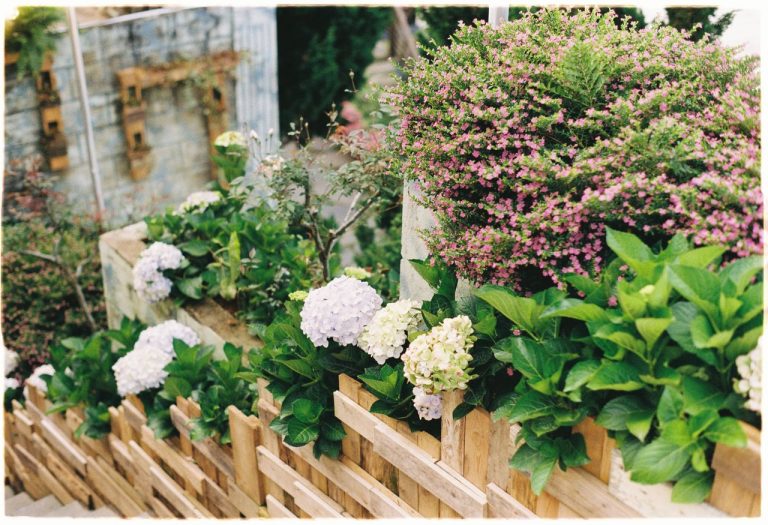
A drought tolerant garden is not a garden that never gets watered. It is one designed so that the watering stops being the thing holding it together, which takes planning, soil work, and a year or two of patience before the savings appear. Done badly it becomes gravel, three yuccas, and a weed problem. Done properly it looks better in August than a lawn does, and it costs less to keep.
What a drought tolerant garden needs before any plants arrive
Start with the site rather than a plant list. Which parts bake from noon onward, which stay shaded, where water sits after rain, and where it runs off. Grouping plants by water need, so the few thirsty ones sit together near the house and everything else gets left alone, is the single decision that saves the most water later. Colorado State University Extension’s guidance on retrofitting a yard treats that zoning step as the foundation of the whole approach, ahead of plant choice.
Soil comes next and gets rushed the most. Compacted ground sheds water instead of holding it, so rain and irrigation both run off before roots see any of it. Improving structure with organic matter helps in most soils. Adding sand or gravel to clay does not, and can make drainage worse rather than better, which is one of the more persistent pieces of bad advice in circulation.
Then reduce the lawn rather than abolishing it. Outdoor use can account for a large share of a household’s water, which is the reasoning behind the EPA’s outdoor water guidance. Keep turf where it earns its keep, near a terrace or where children play, and replace it elsewhere with planting, paving, or gravel that never asks for a sprinkler.
Planting a drought tolerant garden that still looks designed
Plants adapted to dry summers announce themselves. Silver or grey foliage reflects light, narrow leaves lose less moisture, and aromatic oils in lavender, rosemary, and sage do similar work. The Royal Horticultural Society’s advice on drought-resistant gardening points out that the palette runs well beyond the Mediterranean staples, taking in tough species from central Asia and the Himalayas that read as less predictable in a border.
Structure matters more than in a watered garden, because there is no lush growth to hide behind. Evergreen shapes, clipped mounds, and a few architectural plants give the scheme something to look at in February. Grasses carry movement through late summer. Repetition of three or four species across a bed reads as intentional, while one of everything reads as a collection.
The honest caveat: nothing is drought tolerant in its first year. New plants need regular water through the establishment period, usually a full growing season and sometimes two for shrubs and trees. Autumn planting gives roots months to settle before their first real heat. Skipping that stage is why so many dry gardens fail and get blamed on the plants.
Water, mulch, and the habits that make the difference
Deep and infrequent beats little and often. Shallow daily watering keeps roots near the surface where they dry out fastest, while a long soak every week or two pushes them down. Drip lines and soaker hoses deliver water where it is wanted instead of onto paths and leaves, and a controller that reads soil moisture stops the system running through a rainstorm.
Mulch does more than any gadget. A layer of 5 to 7 centimetres over open soil slows evaporation, suppresses weeds, and moderates soil temperature. Gravel and crushed stone suit dry planting and last indefinitely. Bark and wood chip feed the soil as they break down, though they need topping up and, as the next section covers, they belong away from the house.
Rainwater collection fits this style of garden well, since a dry garden’s peak demand is small enough that a couple of tanks can cover it. Check local rules first, since some regions regulate rainwater harvesting and greywater reuse.
The five feet nearest the house
In fire-prone regions this is where dry planting needs the most care, and where a lot of attractive schemes get it wrong. CAL FIRE’s defensible space guidance treats the first five feet around a building as an ember-resistant zone, kept clear of combustible material: no bark mulch against the wall, no woody shrubs under the eaves, no firewood stacked on the terrace. Most homes lost to wildfire are ignited by embers rather than by the fire front reaching them.
That does not mean bare dirt. Stone, concrete, pavers, or gravel work in that strip, along with low, well-watered, non-woody planting kept trimmed. Beyond it, spacing between shrubs and clearance under trees does the rest. Aromatic Mediterranean shrubs are lovely and also resinous, which is an argument for keeping them a few metres out rather than banked against the render.
Insurers in exposed areas increasingly ask about this. A property that fails a defensible space inspection can face problems at renewal, so the landscaping decision and the insurance decision are the same decision in those regions.
Gardens that have to survive an absent owner
Dry planting suits second homes better than anything else, because a garden that depends on a gardener showing up twice a week is a garden that dies during a long absence. This is worth building into the plan for anyone weighing the vacation home ownership costs, since maintenance is one of the line items people underestimate most.
Practical adjustments help. Oversize the mulch layer. Choose species that tolerate neglect rather than ones that merely tolerate heat. Put irrigation on a timer and have someone check it after the first hot spell, because a failed drip line during six weeks away kills more plants than any drought. Avoid pots as the main planting, since containers dry out in days.
A short checklist before starting
- Map sun, shade, and runoff across the plot before choosing a single plant.
- Group planting by water need instead of by appearance.
- Improve soil structure with organic matter, and skip the sand-into-clay idea.
- Plan for a full establishment season of regular watering.
- Keep combustible mulch and woody shrubs out of the first five feet in fire-prone areas.
- Check local rules on rainwater collection and greywater before installing anything.
Common questions about a drought tolerant garden
How long before it stops needing water?
Most planting needs regular irrigation through the first growing season, and shrubs and trees often need a second. After that, established plants in prepared soil with a good mulch layer usually manage on rainfall in a normal year, with occasional deep soaks during extended heat.
Is gravel the best mulch?
For dry planting it works well and never needs replacing, and it suits gravel-garden style. Organic mulches improve the soil as they decompose, which gravel does not, so many gardens use both in different places. Neither belongs tight against the walls of a house in a wildfire zone.
Does a drought tolerant garden lower property value?
Not when it is designed rather than defaulted into. Buyers respond badly to bare gravel and dead patches, and well to structured planting that clearly survives the local summer. In water-restricted regions a garden that stays presentable under a hosepipe ban is a selling point rather than a compromise.
Can this work in a cool, wet climate?
Yes, with different plants and more attention to drainage. Dry summers are now common well outside the Mediterranean, and the limiting factor in a cool climate is usually winter wet at the roots rather than summer heat. Raised beds, grit in the planting hole, and species chosen for sharp drainage handle that.
