
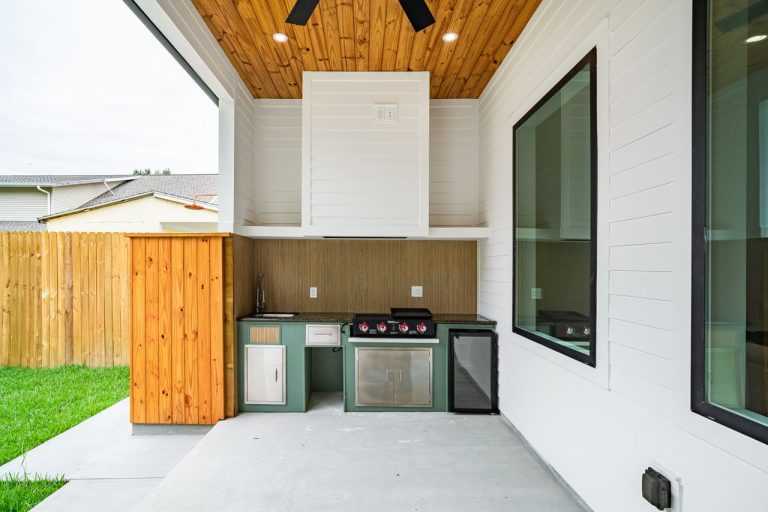
Outdoor kitchen cost estimates vary more than almost any other home project, because the phrase covers a grill dropped into a block island and a full second kitchen with running water, refrigeration, and a roof. The quote follows the utilities and the structure far more than the appliances, which is the opposite of what most buyers assume when they start shopping.
Outdoor kitchen cost: where the money goes
Cost guides put a typical built-in project somewhere between 7,000 and 35,000 dollars, with modular installations at the lower end and custom masonry builds running well past the top of that range. HomeGuide’s 2026 cost data breaks it down by component, and the pattern is consistent: the island framework, countertops, and labour usually account for more than the appliances that get all the attention.
Utilities are where budgets break. A gas line run from the meter, a dedicated circuit for refrigeration and lighting, water supply, and drainage each carry their own trenching and permit costs, and distance from the house multiplies all of them. A kitchen sited 30 metres down the garden can cost several thousand more than the same kitchen against the back wall, before a single stone is laid.
Then the items that appear late. Permits and inspections, which most jurisdictions require for gas and electrical work. A roof or pergola, which changes the project from a cooking station into a structure with its own planning requirements. Weather-rated appliances, since indoor refrigerators are not built for high ambient heat and fail early outdoors. Winterisation in cold climates, meaning frost-proof plumbing and a way to drain the lines.
Fire clearances and the covered kitchen problem
Grills near structures cause real fires. The National Fire Protection Association’s grilling safety guidance is built on incident data showing that placing combustible material too close to the grill is a leading cause, with wall coverings, exterior trim, and plants among the first things to ignite. Built-in installations need proper non-combustible enclosure and the manufacturer’s stated clearances, which are specific to the appliance and not a general rule of thumb.
Covered outdoor kitchens carry a second risk that gets less attention. A roof that makes the space usable in rain also traps combustion gases. The CDC is direct about this: charcoal and other fuel-burning appliances should never be used in enclosed or partly enclosed spaces, and carbon monoxide kills several hundred people a year in the US alone without ever being smelled. A properly designed covered kitchen has an extraction hood rated for outdoor cooking, adequate open sides, and a CO alarm if any part of the structure adjoins the house.
Insurance and local codes both come into this. Some jurisdictions restrict grills under overhangs entirely, and a built-in installation that ignores manufacturer clearances gives an insurer an easy argument at claim time.
Materials that hold outdoor kitchen cost down over time
Everything outdoors ages faster, and replacement is the real outdoor kitchen cost nobody quotes. Cabinetry in marine-grade stainless, powder-coated aluminium, or purpose-made outdoor polymer lasts. Standard kitchen carcasses swell and delaminate within a couple of seasons, whatever the installer claims.
Countertops divide clearly. Granite and dense porcelain handle sun, frost, and spills well. Concrete works if sealed and resealed. Marble stains and etches badly outdoors, and quartz composites yellow and can warp under direct ultraviolet exposure, which surprises people who chose them for the indoor kitchen. Stone veneer and full masonry both work for the structure, with the caveat that the substrate matters more than the facing.
Appliances need outdoor ratings rather than outdoor styling. A grill built from 304 stainless with heavy grates and a warranty covering the whole unit is a different product from a badged import with thin metal that pits in a season near the coast. The same applies to refrigeration, which is why the outdoor-rated versions cost more.
Design decisions that get regretted
Layout errors are expensive to fix in masonry. Common ones worth planning around:
- Too little landing space beside the grill, which leaves nowhere to put a hot tray.
- Prevailing wind blowing smoke straight at the seating, which is a site observation rather than a drawing decision.
- Sink and fridge placed so the cook has to walk back indoors anyway, which defeats the point of the build.
- Bar seating directly across the grill, putting guests in the heat and the smoke.
- No shade over the working side, making the space unusable at the hottest part of the day.
- Lighting planned only for the ceiling, leaving the cooking surface in shadow after dark.
A kitchen near a pool needs extra thought, since chlorinated splash and damp air accelerate corrosion on anything less than good stainless. The same goes for drainage, which matters as much here as it does around home saltwater pools.
Food safety at distance from the kitchen
Cooking away from the indoor fridge changes the handling. Raw meat carried out on a platter and returned to the same platter after cooking is the classic error, and heat outdoors is on the bacteria’s side. USDA guidance on grilling and food safety sets the practical numbers: 145°F for whole cuts of beef, pork, lamb and veal with a three-minute rest, 160°F for ground meats, 165°F for all poultry, and cooked food held at 140°F or above until served.
The design implication is simple. An outdoor fridge and a sink with hot water are not luxuries in a kitchen that gets used, they are what stops the cook shuttling raw food back and forth across the garden.
Common questions about outdoor kitchen cost
Does an outdoor kitchen add value to a home?
A well-built one supports value in warm-climate markets where buyers expect outdoor living, though the return rarely matches the spend and depends heavily on quality. A permanent built-in with good materials reads as part of the house. A cart parked on a patio adds nothing.
Is a modular kitchen cheaper than a custom build?
Considerably, and it is often the better decision. Modular units arrive prefabricated, install in days rather than weeks, and can be moved or replaced. Custom masonry makes sense when the patio is permanent, the appliance package is expensive, or the kitchen has to tie into existing stonework.
Do you need a permit for an outdoor kitchen?
Usually for the gas, electrical, and plumbing work, and often for any roofed structure. Requirements are local, and unpermitted work tends to surface during a sale or a claim. Check before the concrete goes down rather than after.
What is the most overlooked outdoor kitchen cost?
The trenching and utility runs, followed by weather-rated appliances. Buyers budget for the grill and the stone, then find that getting gas, power, water, and drainage to a spot 20 metres from the house costs more than the countertops.
